
Article
Grease Stalactites in Restaurant Kitchen Exhaust Systems
Published
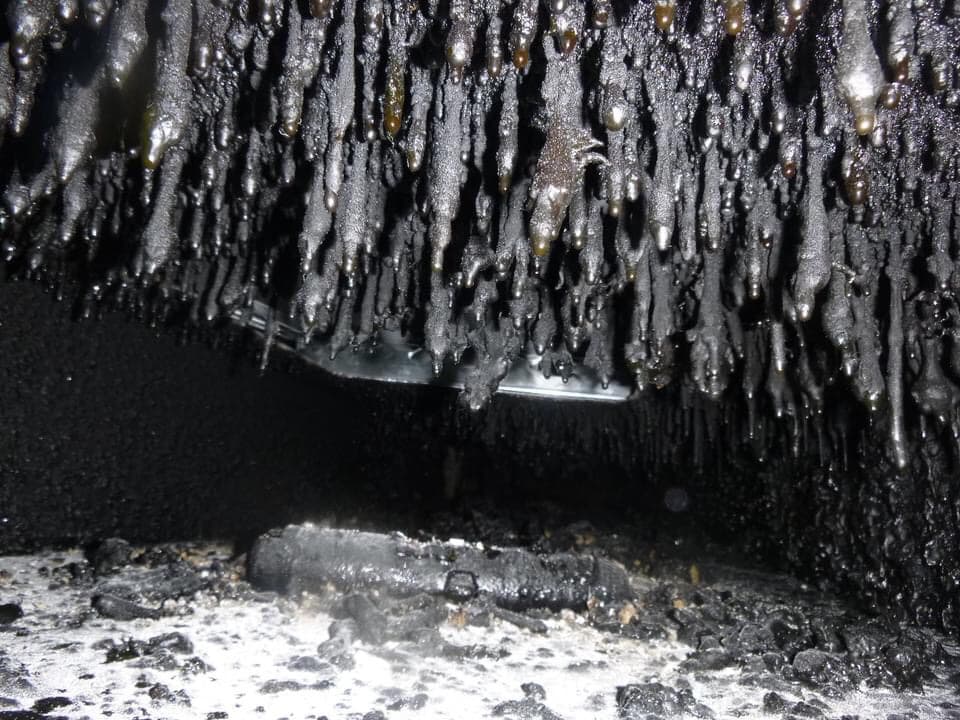
Grease stalactites are one of the clearest warning signs that a restaurant kitchen exhaust system has gone too long without proper cleaning. While the term may sound unusual, the condition itself is very real—and very dangerous. These hanging formations of hardened grease develop slowly over time and indicate extreme buildup inside ductwork.
This article explains, in simple and easy language , what grease stalactites are, how they form, why they appear in certain kitchens, and what they tell restaurant owners about the condition of their exhaust system. There is no technical jargon and no over-formatting. The goal is to help owners understand what they are looking at and why it matters.
Luckily they gave us a call and we were able to clean it up for them.
What Are Grease Stalactites?
Grease stalactites are hardened formations of grease that hang down from the inside of exhaust ducts, much like mineral stalactites form in caves. Instead of water dripping through rock, grease vapors condense, drip, and harden inside ductwork.
As grease builds up layer by layer, it begins to sag under its own weight. Over time, gravity pulls the grease downward, forming thick, hanging strands. These formations are not surface-level dirt. They are clear signs of long-term neglect inside the exhaust system.
Why Certain Types of Cooking Create This Problem
Not all cooking produces grease stalactites. This condition is most often seen in kitchens that generate large amounts of airborne grease. High-grease cooking methods include charbroiling, frying, wok cooking, and certain types of ethnic cuisine that use high heat and oil.
These cooking methods release heavy grease vapors that move into the exhaust system rapidly. When exhaust systems handling this type of cooking are not cleaned thoroughly and regularly, grease buildup accelerates. Over time, gravity and condensation do the rest.
How Grease Stalactites Form Over Time
- Grease stalactites do not form overnight. They develop through a slow and predictable process.
- First, grease vapors rise into the exhaust hood and pass through filters.
- Some grease escapes the filters and enters the ductwork.
- As the vapors cool, grease condenses and sticks to the metal surfaces.
- During each cooking cycle, more grease is added. In neglected systems, this grease is never fully removed.
- Moisture from steam and cleaning processes can cause grease to soften and drip.
- As it drips and hardens repeatedly, stalactite-like formations begin to appear.
What Grease Stalactites Say About System Condition
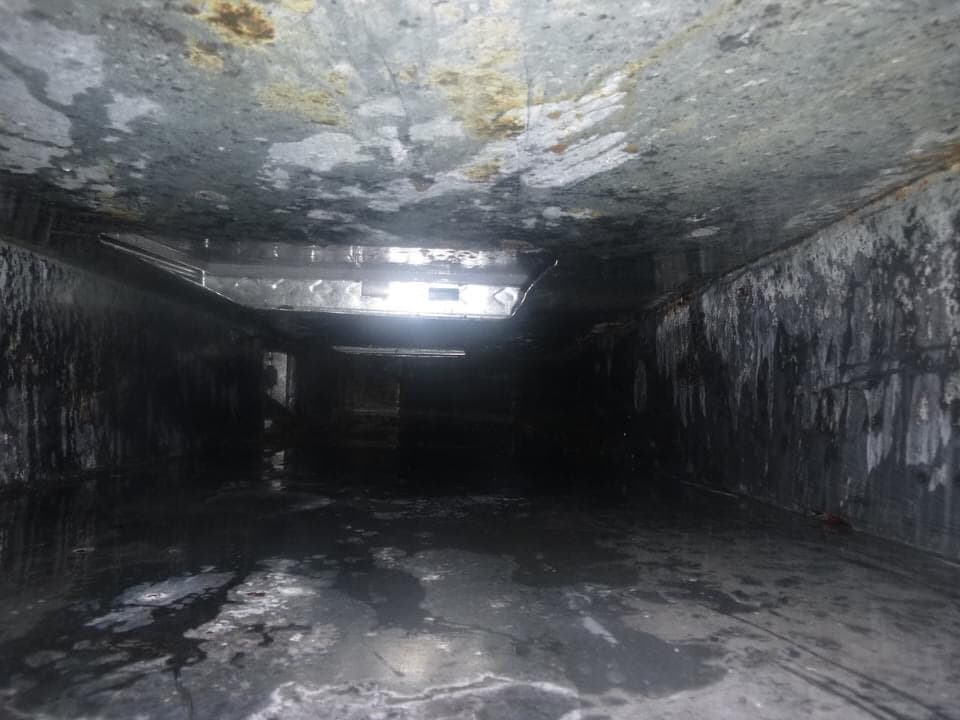
Grease stalactites are not a minor issue. They are a clear signal that cleaning has been incomplete or absent for an extended period. When these formations are present, it usually means duct interiors have not been accessed properly. Cleaning has focused only on visible areas.
In other words, the system may have been “serviced” without actually being cleaned where it matters most. This condition shows the exhaust system is in poor health and needs urgent attention.
Fire Risk Associated With Grease Stalactites
Grease is highly combustible. When grease stalactites are present, there is a large amount of fuel suspended inside the exhaust system. If flames flare up from cooking equipment, they can be drawn into the hood and carried directly to these grease formations.
Once ignited, grease fires spread rapidly through ductwork. Because these fires occur inside concealed spaces, they are extremely dangerous. Grease stalactites dramatically increase the severity of exhaust fires.
Why Owners Often Don’t Know This Is Happening
Most restaurant owners never see inside their exhaust ducts. Once ductwork goes above the ceiling, it is out of sight. Even when grease stalactites are present, there may be no obvious signs in the kitchen. Airflow may still exist. Equipment may still operate. There may be no smoke or odor issues. Without inspection photos or physical access, owners have no reason to suspect extreme buildup.
The Alhambra Restaurant Example
In one Alhambra restaurant, grease stalactites had formed throughout the ductwork due to years without proper hood cleaning. The system had not been thoroughly accessed, and grease had accumulated unchecked. When the duct was finally opened, thick grease formations were hanging from the interior surfaces. This restaurant was fortunate. They addressed the problem before a fire occurred. After proper cleaning, the system was restored to a safe condition.
Why Regular Cleaning Prevents This Condition
Grease stalactites only form when grease is allowed to remain inside the duct for long periods. Regular, thorough cleaning removes grease before it can harden and accumulate. The key word is thorough. Cleaning that does not include duct interiors and hard-to-reach areas will not prevent this condition. Systems handling high-grease cooking may require more frequent service to prevent buildup.
Why Frequency Alone Is Not Enough
Many owners assume that increasing cleaning frequency will solve grease problems. Frequency helps, but it does not replace proper access. If cleaning crews do not open access doors or reach all sections of the duct, grease will continue to build up regardless of how often service occurs. Understanding this helps owners ask better questions and avoid a false sense of security.
What Inspectors Think When They See Grease Stalactites
Fire inspectors recognize grease stalactites immediately. These formations are considered signs of serious non-compliance. When inspectors encounter this condition, they often require immediate corrective action. Finding grease stalactites during an inspection is not a warning sign — it is evidence that the system is already overdue for attention.
The Cost of Letting Grease Reach This Stage
Allowing grease to build up to the point where stalactites form increases cleaning difficulty and cost. Heavy, hardened grease requires more labor and specialized methods to remove safely. There is also increased risk of emergency shutdowns, fire damage, and equipment replacement. Preventive cleaning is far less expensive than reactive cleanup.
What Restaurant Owners Can Do
Owners do not need to inspect ducts themselves, but they should stay informed. Asking whether duct interiors are accessed, requesting inspection photos, and understanding warning signs like grease stalactites helps owners protect their business. Awareness is the most effective first step toward prevention.
How Bryan Exhaust Handles Severe Grease Buildup
Bryan Exhaust specializes in addressing severe grease conditions, including grease stalactites. Our approach includes full access to duct interiors and careful removal of hardened grease. By restoring systems to a clean condition, we help owners reduce fire risk and regain compliance. We provide clear reports and recommendations for future maintenance.
Conclusion
In conclusion, grease stalactites are a serious warning sign that an exhaust system has been neglected for a long time. These hanging grease formations show years of incomplete cleaning and create a major fire hazard. They usually appear in busy kitchens where grease vapors are heavy but duct interiors are not properly cleaned.
Regular and thorough exhaust cleaning is the only way to prevent grease stalactites from forming. Restaurant owners should work with experienced companies that provide full system access and detailed photos. Taking this maintenance seriously protects your kitchen, staff, and business from dangerous fires and expensive problems. Good care of the exhaust system keeps everything safe and running smoothly.
FAQs
1. How do I know if a kitchen exhaust cleaning company is good?
Look for experience, certification like IKECA, full-system cleaning, insurance, and clear reports with photos. A reliable company will always show proof of their work and explain the process clearly. They should be willing to answer all your questions and provide references from other restaurants. Choosing such a company reduces fire risks and gives long-term safety for your kitchen.
2. What is the most important thing when choosing a cleaning company?
Full-system cleaning is the most important. They must clean ducts, fans, and hidden areas, not just the hood. Many companies only clean visible parts which leaves dangerous grease inside the system. Always confirm they clean the entire exhaust path to ensure complete protection and compliance with safety standards.
3. Is certification necessary for an exhaust cleaning company?
Yes, certification from NFPA or IKECA shows they follow proper safety standards and cleaning methods. Certified companies are trained to handle different types of grease buildup and follow correct procedures. This training helps them work safely and effectively. Without certification, there is higher risk of improper cleaning and safety violations.
4. How often should I get my exhaust hood cleaned?
It depends on your kitchen type. Greasy and busy kitchens need cleaning every 1-3 months while low-volume kitchens can go longer. High grease producing operations like frying and grilling require more frequent service. Regular professional inspections help determine the exact schedule needed for your specific kitchen.
5. Can I hire any cleaning company that offers low prices?
No, very cheap prices often mean incomplete work. This can increase fire risk and cost more later due to damages or failed inspections. Low-cost services may skip ducts and fans which are the most dangerous areas. It is better to invest in quality service that provides full protection for your restaurant.
6. What insurance should the cleaning company have?
They should have general liability insurance and workers’ compensation to protect your business. This coverage saves you from financial loss if any damage happens during cleaning. Insurance also covers worker injuries on your property. Always ask for proof of insurance before signing any contract.
7. Why is it important to clean the ducts and fan?
Ducts and fans collect hidden grease that can start fires. Cleaning only the hood is not enough as grease builds up deeply inside the system. These hidden areas are major fire hazards that can spread quickly. Proper cleaning of ducts and fans greatly reduces the risk of dangerous exhaust fires.
8. What should I ask before hiring a cleaning company?
Ask if they clean the full system, how they remove hard grease, and if they provide before-after photos. Inquire about their experience with your type of kitchen and what reports they give after service. Good companies are happy to explain their full process. These questions help you understand exactly what service you will receive.
9. What are the red flags to avoid when choosing a company?
Avoid companies that refuse to clean ducts, have no insurance, or do not give proper reports. Other warning signs include no inspection process and pressure to accept very low prices. These signs usually mean poor quality and unsafe service. Always choose a company that is transparent and professional in all aspects.
10. Does proper exhaust cleaning help my kitchen in other ways?
Yes, it improves airflow, keeps the kitchen cooler, reduces equipment damage, and helps pass fire inspections. Clean systems also remove smoke faster and create a better working environment for staff. Equipment lasts longer with fewer breakdowns and repairs. Overall it leads to smoother kitchen operations and lower long-term costs.
Services We Provide
Professional commercial kitchen exhaust and ventilation cleaning services ensuring safety and compliance.
Keep Reading
Related
articles
How Grease-Laden Exhausts Increase Fire Spread
Grease-laden exhausts are one of the most underestimated fire hazards in commercial and industrial kitchens, yet they play a critical role in how quickly fires ignite and…
Read Article
Understanding and Cleaning Charbroiler Grease in High-Volume Restaurants
Charbroilers are a cornerstone of many high-volume restaurants. They produce the flavor customers love, but they also generate one of the most difficult types of grease…
Read Article
Hamburger Grease
Hamburgers and French fries are staples of many successful restaurants, but they also produce some of the most challenging grease conditions found in commercial kitchen…
Read ArticleGet Started
Breathe easy.
One call and it’s handled — cleaning, repairs, documentation and compliance to the NFPA 96 standard. Because Bryan Will Take Care of It.
Prefer email? [email protected]