
Many homeowners continue to debate the question, is duct cleaning a waste of money, especially when it is often marketed as a must-have service. Some people report noticeable improvements after duct cleaning, while others feel no difference at all. The reality is that duct cleaning is neither universally useless nor universally necessary—it depends entirely on specific conditions inside the home.
Understanding how air ducts function and when they actually become problematic is the key to answering whether duct cleaning is worth the cost. When done at the right time and for the right reasons, duct cleaning can deliver real benefits related to air quality, system efficiency, and overall comfort. When done unnecessarily, however, it may feel like wasted money.
What is Air Duct Cleaning?
Air duct cleaning is the professional removal of dust, debris, allergens, and other contaminants from the ductwork of a heating and cooling system. This includes supply ducts, return ducts, vents, grilles, and sometimes internal HVAC components such as blower motors. The goal is to stop contaminants from being continuously circulated throughout the home.
Professional duct cleaning uses specialized equipment designed to dislodge and extract buildup without spreading particles into living spaces. A complete service focuses on the entire air distribution system rather than only the visible vents. When performed correctly, it improves airflow and reduces indoor air pollution.
Why Duct Cleaning is Worth the Investment
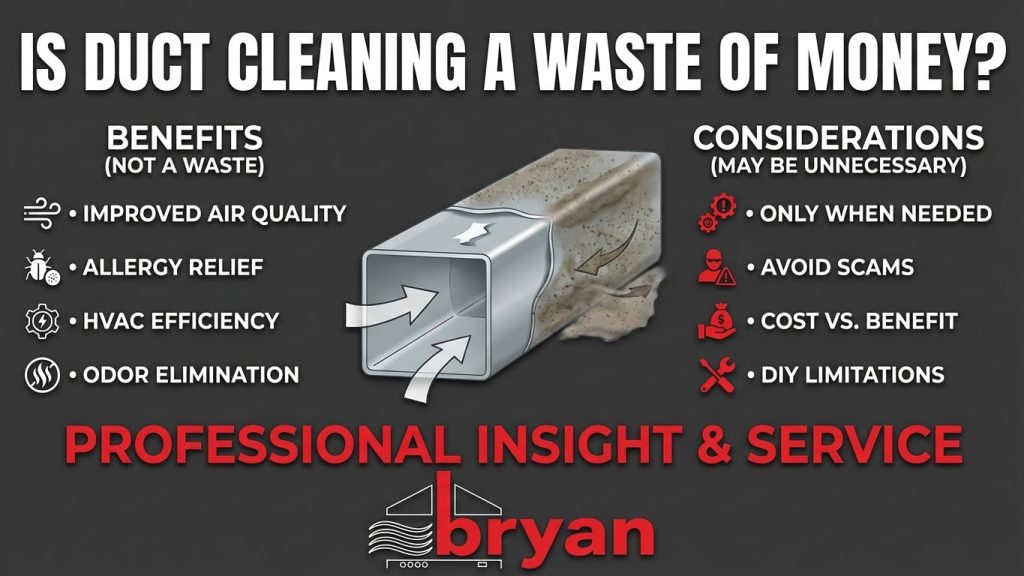
In many households, duct cleaning is far from a waste of money and can provide measurable benefits. Homes with visible dust buildup, allergy sufferers, pets, or moisture problems often experience improvements after cleaning. This is where the question of duct cleaning being a waste of money usually shifts toward a positive answer.
Duct cleaning becomes a smart investment when it solves real indoor air quality problems. The benefits often go beyond cleanliness and contribute to system performance and long-term savings.
Improved Air Quality
Air ducts can trap dust, pollen, pet hair, and other allergens over time. Each time the HVAC system runs, these contaminants are pushed back into the air you breathe. Removing this buildup reduces airborne irritants and improves indoor air quality.
Cleaner air ducts are especially beneficial for people with asthma, allergies, or respiratory sensitivities. Many homeowners notice fewer allergy flare-ups and less dust settling on furniture after professional cleaning. Improved air quality also creates a fresher indoor environment.
Energy Efficiency
Dirty ductwork restricts airflow, forcing HVAC systems to work harder to maintain comfortable temperatures. This added strain increases energy consumption and leads to higher utility bills. Clean ducts allow air to move freely and efficiently throughout the system.
Improved airflow helps heating and cooling systems reach desired temperatures faster. Over time, this efficiency can help offset the cost of duct cleaning. This is one reason duct cleaning is not always a waste of money.
Prevention of Mould and Infestations
Dust combined with moisture creates ideal conditions for mold growth inside air ducts. Once mold develops, spores can spread throughout the home and impact health. Duct cleaning removes the buildup that allows mold to grow.
Dirty ducts can also attract insects and rodents looking for warmth and nesting materials. Cleaning removes debris that pests rely on and discourages infestations. Preventing these issues early avoids costly repairs later.
When Duct Cleaning Might Be Unnecessary
Despite its benefits, duct cleaning is not needed in every home. In some cases, homeowners may not notice any improvement after cleaning. This is why some people believe duct cleaning is a waste of money.
Knowing when duct cleaning is unnecessary helps homeowners avoid spending money on services they do not need. A proper inspection usually determines whether cleaning is justified.
Homes with Well-Maintained HVAC Systems
Homes with regularly changed filters and consistent HVAC maintenance often have clean ductwork. When dust levels inside ducts are minimal, duct cleaning offers little additional benefit. In these cases, routine maintenance is usually enough.
Newer homes with sealed duct systems also accumulate less debris. If there are no air quality complaints or visible contamination, duct cleaning may not be cost-effective.
Risks of Over-Cleaning
Frequent or aggressive duct cleaning can damage duct linings or insulation. Improper techniques may loosen connections or create leaks in the duct system. Over-cleaning can reduce system efficiency rather than improve it.
Low-quality service providers may also fail to remove contaminants effectively. This reinforces the importance of choosing experienced professionals and cleaning only when necessary.
Why Do You Need to Have Dirty Air Ducts Cleaned?
Dirty air ducts continuously circulate contaminants throughout the home every time the HVAC system operates. This affects air quality, comfort levels, and system performance. Over time, the buildup becomes worse and harder to manage.
Unclean ducts cause dust to reappear quickly after cleaning surfaces. They may also produce unpleasant odors and uneven airflow. Cleaning restores balance and cleanliness to the system.
Signs of Dirty Air Ducts
Dust blowing from vents is one of the most obvious warning signs. Persistent musty smells and unexplained allergy symptoms also indicate contaminated ductwork. Uneven heating or cooling may signal airflow restrictions.
If dust returns shortly after cleaning furniture, ducts may be the source. A professional inspection confirms whether cleaning is needed. Ignoring these signs leads to worsening indoor air quality.
What Should You Expect From Air Duct Cleaning Services?
Professional air duct cleaning begins with a full system inspection to assess contamination levels. Technicians seal vents and use high-powered vacuums to prevent debris from spreading into living spaces. Specialized tools loosen and remove buildup from inside the ducts.
After cleaning, airflow and system performance are checked. Homeowners often notice improved airflow and reduced dust levels. A quality service focuses on results, not speed.
Air Duct Cleaning Checklist
A complete duct cleaning service includes multiple steps to ensure effectiveness.
- Supply and return duct cleaning, which removes accumulated dust and debris that would otherwise continue circulating throughout the home with every HVAC cycle. This step improves airflow balance and reduces airborne contaminants significantly.
- Register and grille cleaning, ensuring that visible vents are free of buildup that can restrict airflow and blow dust directly into rooms. Clean registers also help maintain consistent air distribution throughout the home.
- HVAC component inspection, including blower motors and accessible internal parts, to confirm that debris is not affecting system performance. This inspection helps identify issues early before they lead to costly repairs.
- Debris containment and removal, using sealed vacuums and protective barriers to prevent dust from escaping into living areas during cleaning. Proper containment is essential for maintaining indoor cleanliness.
- Post-cleaning airflow verification ensures the system operates efficiently and evenly after service completion. This final step confirms the cleaning was effective.
How to Prevent Air Duct Contamination
Preventing contamination reduces the need for frequent duct cleaning. Simple habits can protect air quality long-term.
- Replace HVAC filters regularly, as clean filters trap dust and allergens before they enter ductwork and circulate through the home. This is one of the most effective ways to keep ducts clean.
- Control indoor humidity levels, because excess moisture encourages mould growth inside ducts and HVAC components. Using dehumidifiers helps prevent microbial buildup.
- Schedule annual HVAC inspections, allowing technicians to detect airflow problems or contamination early. Preventive maintenance reduces long-term costs.
- Keep vents unobstructed, ensuring furniture or debris does not block airflow and cause dust buildup inside ducts. Proper airflow helps maintain system balance.
- Seal duct leaks promptly, preventing dust, insulation particles, and contaminants from entering the system through gaps. Sealed ducts stay cleaner and more efficient.
Detailed Cost vs Value Analysis of Air Duct Cleaning
Homeowners often return to the question, is duct cleaning a waste of money, when considering the price. The value depends on contamination severity, home size, and HVAC usage patterns. The table below compares cost versus benefit scenarios.
| Condition | Light Contamination | Heavy Contamination |
| Cleaning Cost | Moderate and manageable | Higher due to labor and equipment |
| Air Quality Improvement | Minimal and subtle | Significant and noticeable |
| Energy Savings | Low impact | Moderate to great improvement |
| Allergy Relief | Unlikely | Very likely |
| Long-Term Value | Limited | Strong and justified |
Homes with heavy contamination gain far more value. In these cases, duct cleaning is clearly not a waste of money.
Frequently Asked Questions
Can duct cleaning improve sleep quality?
Cleaner air can reduce nighttime irritation and congestion. This may help improve sleep comfort.
Does duct cleaning remove pet odors?
It can reduce odors caused by pet hair and dander. Strong odors may require additional treatments.
Is duct cleaning noisy?
Some noise is expected from the equipment. It is temporary and manageable.
Will duct cleaning affect thermostat performance?
Indirectly, improved airflow can help maintain stable temperatures. Thermostat accuracy itself is unchanged.
Can duct cleaning prevent HVAC breakdowns?
Cleaner systems experience less strain, which may reduce wear. It supports system longevity.
Is duct cleaning environmentally friendly?
It can reduce energy use by improving efficiency. Lower energy consumption benefits the environment.
Does duct cleaning help with smoke odors?
It can reduce lingering smoke particles. Severe cases may need additional remediation.
Should duct cleaning be done before HVAC replacement?
Yes, cleaning prevents debris from entering the new system. It protects your investment.
Conclusion
So, is duct cleaning a waste of money? The answer depends entirely on the condition of your ductwork and indoor air quality needs. For homes with dirty ducts, airflow problems, or allergy concerns, duct cleaning offers real, measurable benefits. In well-maintained systems, it may not be necessary.
Making the right decision requires inspection, not assumptions. When performed at the right time by qualified professionals, duct cleaning improves comfort, efficiency, and air quality. Understanding when it adds value ensures your money is well spent.
Our Professional Services
Complete commercial kitchen exhaust & hood cleaning solutions
Restaurant Flue Cleaning
Professional flue cleaning services to reduce fire hazards and keep your restaurant compliant.
Learn MoreExhaust System Service
Full inspection, cleaning, and maintenance of commercial exhaust systems.
Learn MoreHood Cleaning & Repairs
Complete hood cleaning and repair services for commercial kitchens.
Learn More