
Cleanliness of restaurant kitchen exhaust systems is the restaurant owners responsibility.
Cleanliness of a restaurant kitchen exhaust system is not a technical detail that can be ignored or fully delegated. It is a core responsibility of restaurant ownership. No matter how often a hood cleaning company services your system, the law is clear: the restaurant owner is ultimately responsible for the condition, maintenance, and cleanliness of the exhaust system.
This guide is written in simple, plain language. It is not meant for engineers or inspectors. It is meant for restaurant owners and managers who want to clearly understand what the responsibility is, why it matters, where problems usually occur, and how to protect their business. There is no technical jargon, no excessive lists, and no filler. Just clear explanations based on real-world exhaust systems.
Owner Responsibility Is Not Optional
Many restaurant owners believe that once they hire a hood cleaning company in los angeles, the responsibility shifts away from them. This belief is one of the most common and dangerous misunderstandings in the food service industry.
Fire codes and mechanical codes place the responsibility squarely on the owner. Even if a cleaning company fails to do a proper job, inspectors, fire marshals, insurance companies, and courts do not hold the contractor responsible first. They hold the owner responsible.
The California Mechanical Code (CMC), which follows the national fire standard NFPA 96, states clearly that the responsibility for inspection, testing, maintenance, and cleanliness of commercial cooking exhaust systems belongs to the owner of the system unless that responsibility has been formally transferred in writing.
In simple terms, this means one thing: if grease is found, it is your problem, even if someone else was paid to clean it.
What the Law Is Really Saying
The code language often sounds technical, but the meaning is straightforward. The law does not care who last touched the system. It only cares whether the system is clean and safe.
If a fire inspector opens an access door and finds heavy grease buildup, the citation is written to the restaurant. If a fire occurs and investigators find poor exhaust maintenance, the business owner is the one answering questions. If an insurance company reviews a claim and sees a dirty exhaust system, coverage can be delayed, reduced, or denied.
This is why understanding the condition of your exhaust system is just as important as having it serviced.
Why Grease in Exhaust Systems Is So Dangerous
Grease inside an exhaust system is not just dirt. It is fuel. When grease builds up inside hoods, ducts, and exhaust fans, it creates a direct path for fire to travel from the cooking surface to the roof.
Exhaust fires spread quickly because they are hidden. By the time flames or smoke are visible, the fire has often already moved through ductwork. Suppression systems are designed to slow fires, not compensate for heavily contaminated systems.
Beyond fire risk, grease buildup also leads to:
- Faster wear on fans and motors
- Strong odors and smoke retention
- Failed health or fire inspections
- Roof damage caused by grease saturation
None of these issues happen overnight. They develop slowly, which is why they are so often ignored.
How Grease Builds Up Even With Regular Cleaning
One of the biggest surprises for restaurant owners is discovering heavy grease buildup in systems that are supposedly cleaned on schedule. This happens more often than most people realize.
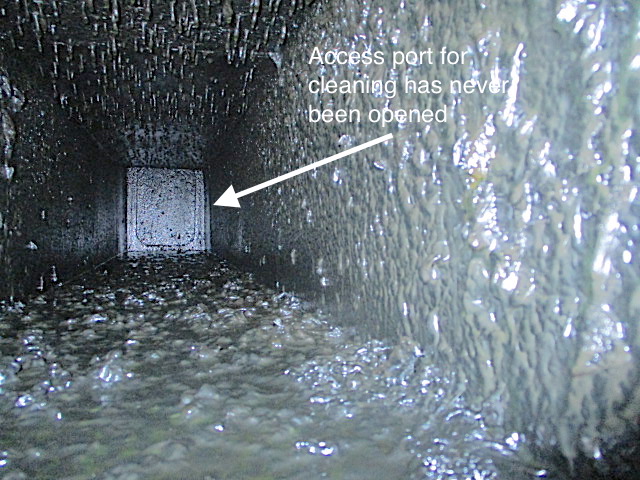
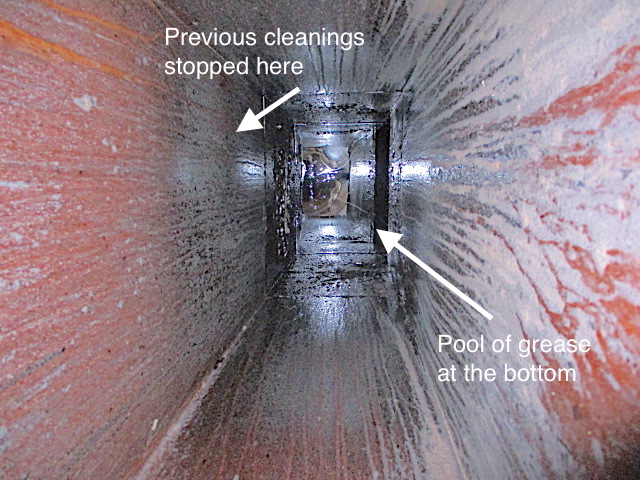
The reason is simple. Not all areas of an exhaust system are equally easy to reach. Some sections require access doors to be opened. Others require fan components to be partially disassembled. If these steps are skipped, grease remains behind.
Over time, grease continues to accumulate in these hidden areas while the visible portions of the hood look clean. From the kitchen floor, everything appears fine. Inside the duct, the system becomes more dangerous with every service cycle.
At Bryan Exhaust, we have inspected systems that were serviced regularly yet contained close to 100 pounds of grease hidden in duct bottoms and fan housings. The owners had no idea.
The Most Commonly Missed Areas in Exhaust Systems
| Exhaust Area | Why It’s Often Missed | Why It Matters |
|---|---|---|
| Upper duct sections | Difficult access | Fire can spread vertically |
| Duct elbows and turns | Require extra labor | Grease pools and thickens |
| Fan housings | Time-consuming to clean | Roof fire risk |
| Areas behind access doors | Doors not opened | Hidden grease buildup |
| Bottom of vertical ducts | Out of sight | Large grease accumulation |
This table represents the areas where inspections most often uncover serious problems.
Why “It Gets Cleaned” Is Not the Same as “It Is Clean”
Many cleaning companies provide service stickers or paperwork stating that the exhaust system was cleaned. While documentation is important, it does not guarantee quality.
A system is only truly clean when all required areas have been accessed and grease has been removed down to bare metal. Anything less means grease remains inside the system.
Owners should understand that cleaning is not just a schedule. It is a result. The only reliable way to confirm that result is through inspection and visual verification.
The Importance of Photo Documentation
One of the most effective ways for owners to protect themselves is by requesting photo documentation of their exhaust system. Photos remove uncertainty.
When you can see the inside of your ductwork and fan housing, you know exactly what condition the system is in. If you have not seen photos of the interior of your exhaust system recently, you are relying on trust alone.
Many reputable exhaust service providers offer inspections with pictures. These inspections often reveal problems early, before they become violations or hazards.
What Fire Inspectors Actually Look For
Fire inspectors are trained to look beyond surface cleanliness. A shiny hood does not mean a safe system.
Inspectors often check:
- Interior duct conditions
- Fan housings and grease containment
If grease is found in these areas, citations are issued regardless of cleaning frequency or service records. Repeated violations can lead to fines, mandatory re-inspections, or even temporary shutdowns.
Cleaning Frequency Is Not One-Size-Fits-All
How often an exhaust system should be cleaned depends on how much grease your kitchen produces. A high-volume restaurant cooking greasy foods will need service far more often than a low-volume operation.
Relying on a generic schedule without inspections can leave systems either over-serviced or dangerously neglected. The correct approach combines scheduled cleaning with periodic inspections.
The Financial Risk of Poor Exhaust Maintenance
Ignoring exhaust cleanliness is expensive in the long run. Fires, equipment damage, and inspection failures all cost far more than preventive maintenance.
Even without a fire, grease-related roof damage, fan failure, and lost operating time add up quickly. In many cases, insurance companies closely review maintenance history after an incident.
Owners who actively verify exhaust condition are far less likely to face unexpected costs.
How Bryan Exhaust Supports Restaurant Owners
Bryan Exhaust works with restaurant owners to inspect, evaluate, and correct exhaust system issues. Our focus is not just cleaning schedules, but real system condition.
By identifying hidden grease buildup, airflow problems, and overlooked areas, we help owners understand exactly where they stand. This clarity allows informed decisions, reduces risk, and supports compliance.
Final Thoughts: Responsibility Means Awareness
Exhaust system cleanliness is not about blame. It is about awareness. The law makes the owner responsible, but that responsibility can be managed through knowledge, inspection, and verification.
If you own or manage a restaurant, the safest approach is simple: know what your exhaust system looks like on the inside. Ask questions. Request photos. Address issues early.
Clean exhaust systems protect people, property, and businesses. Awareness protects owners.
Services We Provide
Professional commercial kitchen exhaust and ventilation cleaning services ensuring safety and compliance.