

When a restaurant kitchen exhaust system suddenly stops working, it can feel like an emergency—and in many cases, it is. Without a functioning exhaust system, smoke, heat, and grease quickly build up in the kitchen, making it unsafe and often forcing operations to stop.
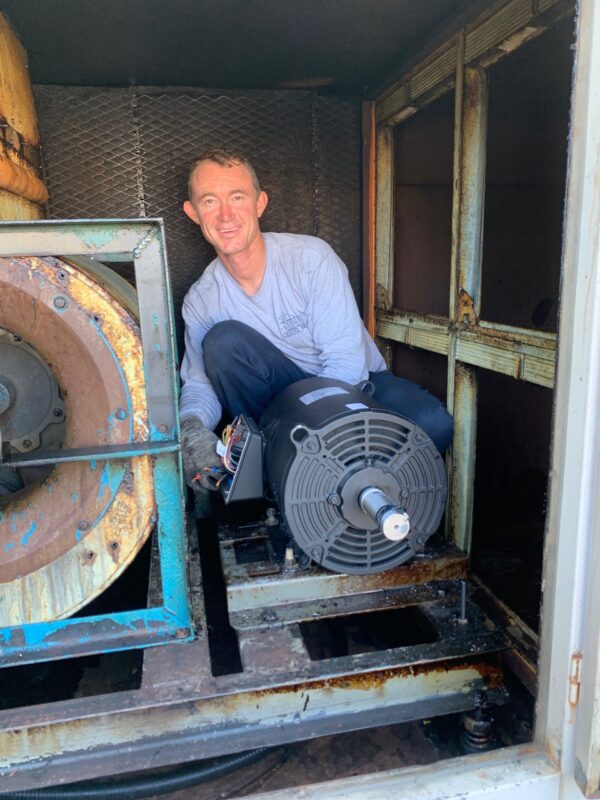
In this Santa Monica restaurant, a very large kitchen exhaust system went down unexpectedly. At first, the issue appeared to be something minor. In many cases, exhaust failures are caused by a tripped breaker, a loose belt, or a simple electrical issue. This time, however, the problem was more serious. The exhaust fan motor had failed completely and needed to be replaced.
What made this situation unusual was the size of the motor. This was a 15-horsepower motor, which is far larger than what is typically used in restaurant kitchen exhaust systems. Most exhaust fan motors in restaurants are closer to 2 horsepower. Despite the size and complexity, the motor was replaced and the restaurant was back up and running within a few hours

Why a Working Exhaust Fan Motor Is Critical
The exhaust fan motor is the heart of a kitchen exhaust system. It powers the fan that pulls smoke, heat, and grease-laden air out of the kitchen.
When the motor stops working, airflow stops or drops dramatically. Smoke lingers. Heat builds up. Cooking becomes unsafe and uncomfortable.
In many jurisdictions, operating a kitchen without a functioning exhaust system is not allowed. This means a failed motor can quickly turn into lost revenue if the restaurant must shut down until repairs are made.
Common Reasons Exhaust Systems Stop Working
When an exhaust system goes down, the cause is often something simple.
A tripped breaker can cut power to the fan. A loose or broken belt can prevent the fan from spinning properly. In these cases, repairs are usually quick.
Because these issues are common, they are often checked first. However, when those possibilities are ruled out, attention turns to the motor itself.
When the Problem Is the Motor
Exhaust fan motors work hard every day. They operate for long hours in hot, greasy environments. Over time, wear and tear take their toll.
Motors can fail for several reasons. Bearings can wear out. Electrical components can overheat. Grease buildup can accelerate deterioration.
When a motor fails completely, it must be replaced. Unlike belts or breakers, motors cannot be repaired on the spot.
Why a 15-Horsepower Motor Is Unusual
Most restaurant kitchen exhaust systems use relatively small motors. A 1- to 3-horsepower motor is common for many operations.
A 15-horsepower motor is typically found in very large systems. These systems may serve large kitchens, high-volume operations, or multiple cooking lines.
The size of the motor reflects the amount of air the system must move. Larger kitchens with heavier cooking loads require more powerful fans.
Because these motors are uncommon, replacing them requires additional planning, proper handling, and experience.
Table: Typical Exhaust Fan Motors vs. Large Motors
| Motor Size | Common Use | What It Means |
| 1–2 horsepower | Most restaurants | Standard exhaust systems |
| 3–5 horsepower | Larger kitchens | Higher airflow demand |
| 10–15 horsepower | Very large systems | Heavy-duty exhaust |
This table shows why a 15-horsepower motor stands out in the restaurant industry.
Why Large Motor Failures Can Be More Disruptive
When a small motor fails, replacement is usually straightforward. Parts are readily available, and handling is simple.
Large motors are heavier, more complex, and less common. This can make sourcing and installation more challenging.
Despite these challenges, quick action is essential. The longer the exhaust system is down, the greater the impact on operations.
How This Santa Monica Restaurant Was Affected
When the exhaust system went down, the restaurant could not continue normal operations. Heat and smoke built up quickly.
Initial checks ruled out simple issues like breakers and belts. Once it was clear the motor had failed, replacement became the priority.
Because of the system’s size, this was not a routine motor swap. However, with proper planning and experience, the motor was replaced efficiently.
Why Speed Matters During Exhaust Failures
Time is critical when an exhaust system fails. Every hour without proper ventilation affects staff comfort, safety, and productivity.
Extended downtime can lead to lost business, canceled orders, and frustrated customers.
Restoring airflow as quickly as possible minimizes disruption and helps restaurants get back to normal operations.
Why Preventive Maintenance Helps Avoid Motor Failures
While motor failures cannot always be predicted, regular maintenance reduces risk.
Keeping exhaust systems clean helps motors run cooler and more efficiently. Removing grease buildup reduces strain on moving parts.
Routine inspections can identify warning signs such as unusual noise, vibration, or overheating before complete failure occurs.
Why Owners Often Underestimate Motor Size and Importance
Many restaurant owners never see their exhaust fan motors. They are usually located on the roof or inside equipment housings.
Because the system works quietly in the background, its complexity is easy to overlook. The difference between a 2-horsepower motor and a 15-horsepower motor may not seem important—until something goes wrong.
Understanding the scale of the equipment helps owners appreciate the importance of proper care and quick response.
Getting the Restaurant Back Up and Running
Despite the unusual motor size, this Santa Monica restaurant was back up and running within a few hours.
Fast diagnosis, proper equipment, and experience with large systems made the difference.
For the restaurant, this meant minimal downtime and a quick return to normal service.
What Restaurant Owners Can Learn From This
Exhaust system failures are not always simple, but they can often be resolved quickly with the right expertise.
Owners should understand that:
Not all exhaust systems use the same equipment
Larger systems require specialized knowledge
Being prepared and working with experienced professionals reduces downtime when problems occur.
How Bryan Exhaust Handles Motor Replacements
Bryan Exhaust works with restaurant owners to diagnose exhaust system issues quickly and accurately. Whether the problem is a belt, a breaker, or a large motor failure, our goal is to restore airflow safely and efficiently.
Experience with both standard and oversized systems allows us to handle uncommon situations, like replacing a 15-horsepower motor, without unnecessary delays.
Final Thoughts
A failed exhaust fan motor can shut down a restaurant quickly, especially in large systems.
This Santa Monica case shows that even uncommon situations—like replacing a 15-horsepower motor—can be resolved efficiently with the right approach.
Understanding how exhaust systems work, why motors fail, and why quick action matters helps restaurant owners protect their operations and minimize downtime.
Services We Provide
Professional commercial kitchen exhaust and ventilation cleaning services ensuring safety and compliance.
