
Keeping your home’s air clean and healthy is more important than ever, and one often overlooked aspect is the condition of your air ducts. Over time, dust, pollen, pet dander, and other debris can accumulate inside these ducts, reducing indoor air quality and potentially triggering allergies or respiratory issues. Regular maintenance of your HVAC system, including air duct cleaning, ensures that the air circulating in your home remains fresh and safe for your family.
Air duct cleaning is not just about cleanliness; it also contributes to the overall efficiency of your heating and cooling system. When ducts are clogged with dust and debris, your HVAC system has to work harder, increasing energy consumption and utility bills. Understanding how often to clean your air ducts, what signs to watch for, and the benefits of professional cleaning can help homeowners make informed decisions and maintain a healthier living environment.
What Is Air Duct Cleaning?
Air duct cleaning is a professional service that removes accumulated dust, debris, allergens, and contaminants from a home’s HVAC duct system. This includes supply ducts, return ducts, vents, grilles, and sometimes internal HVAC components such as blower motors. The goal is to prevent pollutants from being continuously circulated through indoor air.
The process typically involves specialized vacuums, agitation tools, and containment systems. These tools loosen buildup and safely extract it without releasing particles into living spaces. When done properly, air duct cleaning improves airflow and reduces indoor air pollution.
Is Air Duct Cleaning Necessary?
Air duct cleaning is not mandatory for every home, but it becomes necessary under certain conditions. Homes with visible dust buildup, allergies, moisture issues, or recent renovations often benefit the most. In such cases, cleaning improves both air quality and HVAC efficiency.
For well-maintained homes with clean filters and no air quality complaints, duct cleaning may not be immediately necessary. However, periodic inspection helps determine whether contaminants are building up. Knowing how often air ducts should be cleaned depends on these factors rather than a fixed rule.
How Regularly Should You Get Your Air Ducts Cleaned?
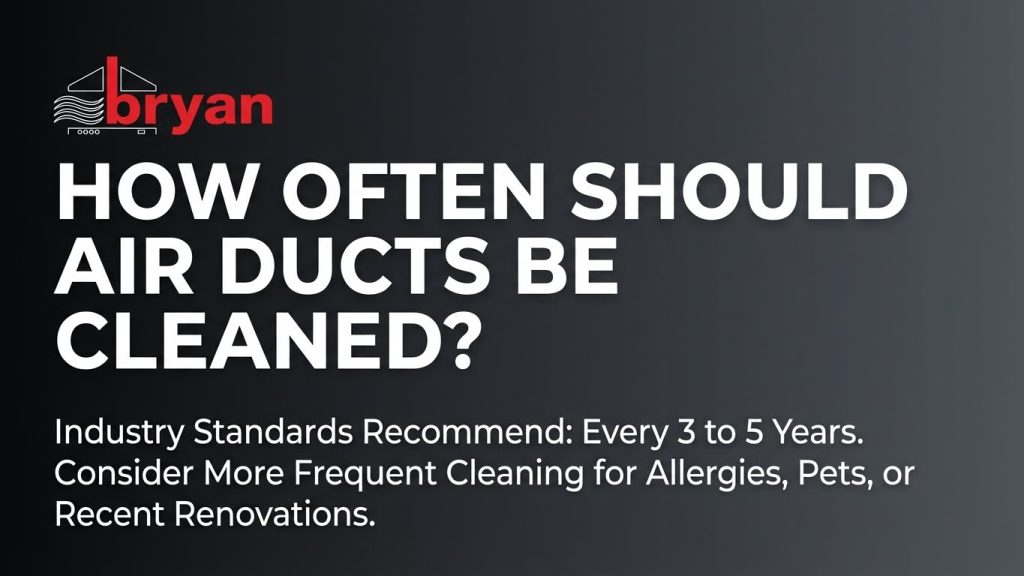
There is no universal schedule that fits every household. Most professionals recommend air duct cleaning every three to five years under normal living conditions. However, some homes require more frequent cleaning due to specific risk factors.
Lifestyle, environmental exposure, and HVAC usage all influence cleaning frequency. Homes with pets, smokers, allergies, or high humidity may need cleaning more often. Understanding these variables helps answer how often air ducts should be cleaned for your specific situation.
Homes with Pets
Pet hair and dander easily enter duct systems and accumulate over time. Even with regular cleaning, these particles continue circulating through indoor air. This buildup can worsen allergies and increase dust levels.
Homes with multiple pets typically require more frequent duct cleaning. Professional cleaning removes embedded hair and dander that filters alone cannot handle. This improves air quality significantly.
Allergy and Asthma Households
Homes with allergy or asthma sufferers are more sensitive to airborne contaminants. Dust, pollen, and mould spores trapped in ducts can trigger symptoms repeatedly. Cleaning reduces these triggers.
In these homes, ducts may need cleaning every two to three years. Cleaner ducts help maintain healthier indoor air. This directly impacts comfort and respiratory health.
After Renovations or Remodeling
Construction projects generate large amounts of dust and debris. Even when work areas are sealed, particles often enter ductwork. This debris continues circulating long after renovations end.
Duct cleaning after remodeling removes construction dust completely. It prevents long-term air quality issues. This is one of the most common reasons ducts need immediate cleaning.
High-Humidity or Coastal Areas
Moisture increases the risk of mold growth inside ducts. High-humidity environments allow dust to combine with moisture, creating ideal conditions for microbial growth. This contamination spreads through the HVAC system.
Homes in humid regions often need more frequent duct inspections. Cleaning helps control mold risks and protects indoor air quality. Dehumidification and maintenance work together with duct cleaning.
Signs Your Ducts Need Cleaning
Air ducts usually show warning signs before problems become severe. Recognizing these signs early prevents bigger issues later. Ignoring them can lead to poor air quality and system strain.
Visible dust, odors, and airflow issues are the most common indicators. These signs suggest contaminants are already circulating. Addressing them promptly restores system balance.
Excessive Dust on Surfaces
If dust returns quickly after cleaning furniture, ducts may be the source. This indicates a buildup inside the system. Cleaning reduces repeated dust accumulation.
Musty or Unpleasant Odors
Persistent odors often originate inside ductwork. Mould, debris, or pest contamination can produce smells. Cleaning removes odor-causing sources.
Uneven Heating or Cooling
Blocked ducts restrict airflow. This causes some rooms to feel warmer or cooler than others. Cleaning restores even air distribution.
What Happens If You Never Clean Your Air Ducts?
Neglecting air duct cleaning allows contaminants to accumulate indefinitely. Dust, allergens, and debris continue circulating throughout the home. Over time, indoor air quality declines noticeably.
Dirty ducts also strain HVAC components by restricting airflow. This increases energy consumption and shortens system lifespan. Eventually, neglect leads to higher repair and replacement costs.
How Often Should Air Ducts Be Cleaned
So, how often should air ducts be cleaned under normal conditions? For most homes, every three to five years is sufficient. This timeframe balances maintenance needs with cost efficiency.
However, certain conditions shorten this interval. Pets, allergies, smoking, moisture, or recent renovations justify more frequent cleaning. The best approach is inspection-based scheduling rather than guesswork.
Benefits of Professional Air Duct Cleaning
Professional duct cleaning provides benefits beyond surface cleanliness. It improves air quality, system efficiency, and overall comfort. These advantages accumulate over time.
Regular professional cleaning also supports HVAC longevity. Cleaner systems experience less strain and fewer breakdowns. This makes duct cleaning a preventive investment.
Improved Indoor Air Quality
Professional cleaning removes deeply embedded contaminants. This reduces airborne dust and allergens significantly. Cleaner air improves comfort and respiratory health.
Increased HVAC Efficiency
Clean ducts allow air to flow freely. This reduces system workload and energy usage. Efficient systems lower monthly utility bills.
Extended HVAC System Life
Reduced strain leads to less wear on components. Motors and fans operate more smoothly. This delays costly repairs and replacements.
Schedule Your Air Duct Cleaning Today
Scheduling professional air duct cleaning is a proactive step toward healthier indoor air. Regular service prevents buildup before it becomes problematic. It also ensures HVAC systems operate efficiently year-round.
Understanding how often air ducts should be cleaned helps homeowners plan maintenance wisely. Timely cleaning protects comfort, health, and property value. Professional inspection ensures cleaning is done only when necessary.
Air Duct Cleaning Frequency Comparison
Understanding cleaning frequency becomes easier when comparing different household conditions. The table below outlines how often air ducts should be cleaned based on lifestyle and environmental factors.
| Home Condition | Recommended Cleaning Frequency | Reason |
| Standard Household | Every 3–5 years | Normal dust buildup without special risk factors |
| Homes with Pets | Every 2–3 years | Pet hair and dander accumulate faster |
| Allergy or Asthma Homes | Every 2–3 years | Reducing airborne irritants improves health |
| Post-Renovation Homes | Immediately after the project | Construction dust contaminates ducts |
| High-Humidity Homes | Every 2 years | Prevents mould growth |
This comparison highlights why frequency varies. Inspection remains the most reliable guide.
Preventive Measures to Reduce Duct Contamination
Some H2 sections benefit from short explanations and practical bullet points. Prevention reduces how often ducts need cleaning.
- Replace HVAC filters consistently, as clean filters trap dust and allergens before they enter ductwork and circulate throughout the home. High-quality filters significantly slow contamination buildup.
- Maintain indoor humidity levels, because moisture accelerates mold growth inside ducts and HVAC components. Dehumidifiers help keep systems dry and clean.
- Schedule annual HVAC inspections, allowing technicians to identify airflow issues or contamination early before cleaning becomes urgent. Preventive maintenance saves money long-term.
- Keep vents and registers clean, preventing surface dust from entering the duct system repeatedly. This simple habit reduces internal buildup.
- Seal duct leaks promptly, stopping dust and insulation particles from entering through gaps. Sealed ducts remain cleaner and more efficient.
Frequently Asked Questions
Can air duct cleaning improve home resale value?
Clean ducts improve air quality perception during home inspections. Buyers often view clean HVAC systems as a maintenance advantage.
Does duct cleaning help reduce indoor humidity?
Indirectly, improved airflow helps HVAC systems manage moisture better. It does not replace dehumidification.
Can air duct cleaning remove smoke residue?
It can reduce smoke particles trapped in ducts. Severe cases may require additional remediation.
Is duct cleaning safe for older homes?
Yes, when performed by trained professionals using proper tools. Careful methods protect older duct systems.
Does duct cleaning reduce HVAC noise?
Improved airflow can reduce strain-related noise. It will not fix mechanical defects.
Is duct cleaning environmentally friendly?
Cleaner systems use less energy, reducing overall energy consumption. This benefits the environment indirectly.
Should ducts be cleaned before installing a new HVAC system?
Yes, cleaning prevents debris from contaminating the new equipment. It protects your investment.
Can duct cleaning improve airflow immediately?
Most homeowners notice improved airflow shortly after cleaning. Results depend on system condition.
Conclusion
So, how often should air ducts be cleaned? For most homes, every three to five years is sufficient, but individual conditions may require more frequent service. Homes with pets, allergies, renovations, or humidity issues benefit from shorter intervals. The key is inspection-based decision-making rather than fixed schedules.
Air duct cleaning is not about unnecessary spending—it is about maintaining healthy air and efficient systems. When done at the right time, it improves comfort, reduces strain on HVAC equipment, and protects indoor air quality. Making informed choices ensures long-term value and peace of mind.
Our Professional Services
Complete commercial kitchen exhaust & hood cleaning solutions
Restaurant Flue Cleaning
Professional flue cleaning services to reduce fire hazards and keep your restaurant compliant.
Learn MoreExhaust System Service
Full inspection, cleaning, and maintenance of commercial exhaust systems.
Learn MoreHood Cleaning & Repairs
Complete hood cleaning and repair services for commercial kitchens.
Learn MoreServices We Provide
Professional commercial kitchen exhaust and ventilation cleaning services ensuring safety and compliance.